If you have ever looked at two Crown Heights townhouses with similar square footage and wondered why they feel priced worlds apart, you are not imagining it. This is a neighborhood where block, layout, condition, landmark status, and outdoor space can change the picture quickly. If you are buying or selling here, understanding those differences can help you read the market more clearly. Let’s dive in.
Why Crown Heights townhouses stand out
Crown Heights has a deep rowhouse history, and that history still shapes today’s market. The neighborhood is often discussed as North and South, divided by Eastern Parkway, with many of its best-known townhouse blocks tied to late-19th- and early-20th-century development.
The Landmarks Preservation Commission describes Crown Heights North as an area with more than 450 buildings, including single- and two-family row houses, freestanding residences, apartment houses, churches, and institutional buildings. Crown Heights North II adds more than 600 buildings, and Crown Heights North III extends that protected rowhouse fabric farther east.
That means you are not looking at one standard housing type when you shop or sell in Crown Heights. You are looking at a broad collection of homes shaped by different eras, layouts, and levels of preservation.
What Crown Heights homes look like
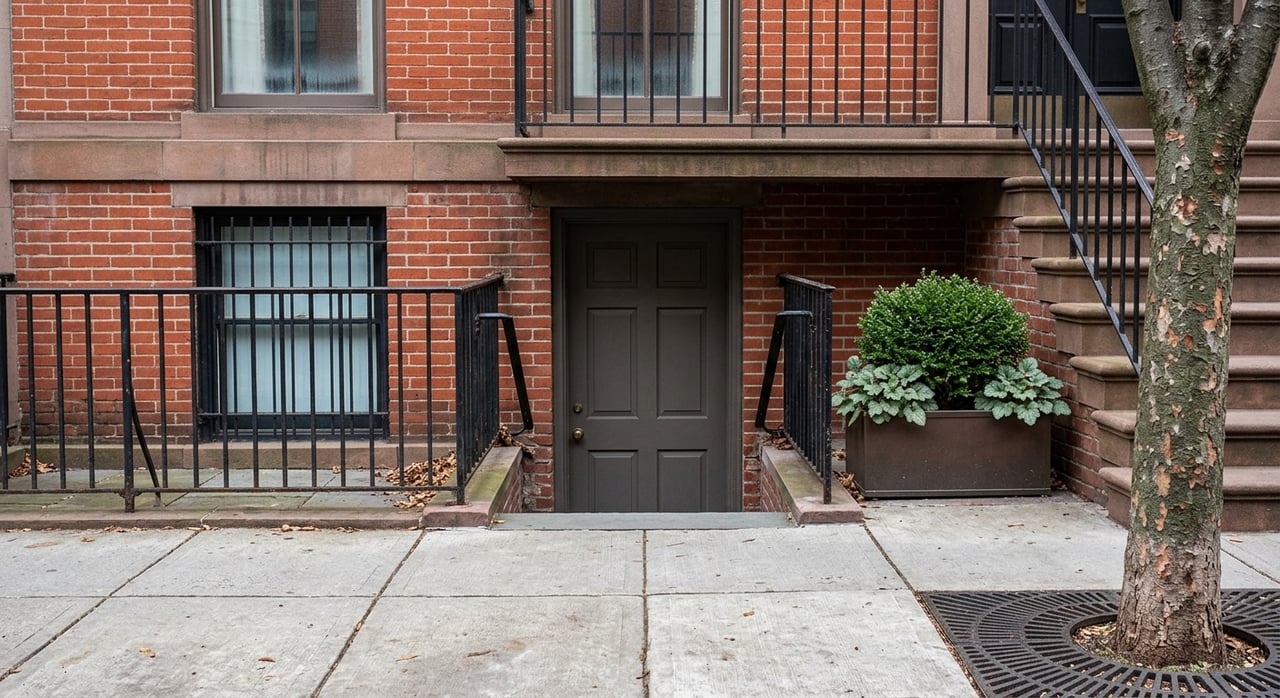
Many older townhouses in Crown Heights feature neo-Grec and Romanesque Revival details. In practical terms, that often means brownstone and brick facades, high stoops, bay windows, and carved ornament that give each block a distinct rhythm.
Later homes added styles like Renaissance Revival, Colonial Revival, Georgian Revival, Queen Anne, Art Deco, and Art Moderne. For buyers and sellers, that architectural range matters because design character can influence both emotional appeal and renovation decisions.
Some houses also include features you may not expect if you picture a classic Brooklyn stoop house and nothing else. Public records show that some later-19th- and early-20th-century homes were built with garages, front lawns, and shared driveways, which helps explain why outdoor space and parking options can vary so much from one block to the next.
Why townhouse types matter
One of the most important things to understand is that Crown Heights townhouses are not all configured the same way. The public record shows single-family row houses, two-family row houses, semi-attached houses, and some freestanding homes.
That difference is more than technical. It can shape how you live in the home, how you value the property, and how buyers compare one house to another.
Many Crown Heights rowhouses were built as two-family homes, and around 1906 a two-family form with separate entrances began to appear. If you are buying, that means layout flexibility should be one of your first questions. If you are selling, that means your home’s configuration needs to be presented clearly and thoughtfully.
What public sales data shows
The New York City Department of Finance rolling sales data is the best public-record starting point for identifying sold properties by neighborhood and building type. In Brooklyn, those records include Crown Heights entries for two-family and three-family dwellings, which can help frame townhouse-like sales.
Current neighborhood dashboards suggest an active market, but also one that is very sensitive to sales mix. PropertyShark reports that in April 2026, the median home sale price in Crown Heights was $1.1 million, with a median price per square foot of $1,023 and 13 transactions.
That same report puts the median house sale price at $1.8 million in April 2026, compared with $1.3 million for condos and $340,000 for co-ops. This is an important reminder that broad neighborhood numbers do not always tell you what is happening in the townhouse segment.
Why median prices can mislead
Crown Heights townhouse sales can be volatile month to month because the number of house trades is relatively small. PropertyShark’s monthly table moved from a median of $485,000 in June 2025 to $1,447,500 in January 2026, which is a dramatic swing.
That kind of movement does not automatically mean values changed at the same pace. It often reflects a thin market where the mix of sold properties shifts between renovated homes, attached rowhouses, and other property types.
Other market trackers tell a similar story, even if their methods differ. Redfin shows a median sale price of $1.3 million over the three months ending April 2026, up 11.7 percent year over year, with homes taking about 85 days to sell. Realtor.com reports 181 homes for sale, a median listing price of $1.2 million, median days on market of 50, and a sale-to-list ratio of 98 percent.
What drives townhouse value
When you look closely at Crown Heights townhouses, value tends to come down to a few key variables working together. This is why two homes that seem similar on paper can trade very differently.
Location within Crown Heights
Location matters within the neighborhood, not just across Brooklyn. Crown Heights is commonly understood as North and South divided by Eastern Parkway, and the city’s neighborhood profile notes historic brownstone architecture, walkable streetscapes, dining and nightlife along Nostrand and Franklin, and merchants on Kingston and Utica.
For buyers, this means your search should stay block-specific. For sellers, it means the surrounding context of your home should be part of the pricing conversation.
Landmark status and approvals
Landmark status can have a meaningful effect on both buyer interest and project planning. The Landmarks Preservation Commission must approve alterations, reconstruction, demolition, or new construction affecting a designated building or historic district.
That does not make a landmarked townhouse better or worse by default. It does mean renovation scope, timing, and preservation expectations may look different than they would for a non-landmarked property.
Condition and preservation
Condition is especially important in a housing stock this varied. In a neighborhood with historic rowhouses, buyers often weigh original details, structural upkeep, kitchen and bath quality, and the overall finish level very carefully.
In a smaller, mix-sensitive market, a polished and well-maintained house can stand apart quickly. That is one reason broad median numbers only take you so far.
Outdoor space and layout
Outdoor space matters because it changes how a townhouse lives day to day. Some homes offer classic rear yards and stoops, while others may have front lawns, garages, or shared driveways.
Layout matters just as much. A single-family setup, a two-family arrangement, or separate entrances can create very different lifestyle and budgeting scenarios for a buyer.
How buyers can evaluate a townhouse
If you are shopping for a townhouse in Crown Heights, try to compare homes beyond the headline price. A smart evaluation usually starts with a few practical questions.
- Is the house single-family or two-family?
- How flexible is the layout for your needs?
- Is the property in a landmarked district?
- What changes may need LPC review?
- How much of the value comes from condition, location, or outdoor space?
- Are you comparing similar house types, or very different ones?
These questions matter because townhouse pricing here is rarely one-dimensional. The more specific your comparisons, the better your decision-making will be.
How sellers can position a Crown Heights townhouse
If you are selling, the biggest mistake is treating your home like a generic Brooklyn listing. Crown Heights buyers often respond to nuance, especially when a home has architectural character, a distinctive layout, or unusually strong outdoor space.
That means pricing needs to reflect the right peer group, not just neighborhood-wide medians. A seller also benefits from presenting the home clearly, especially when the configuration, condition, or historic details are central to its appeal.
For a townhouse market this mix-sensitive, polished preparation can make a real difference. Strong photography, thoughtful styling, and a clear story about what sets the home apart help buyers understand value more quickly.
Why local guidance matters
Because public numbers can swing sharply, Crown Heights townhouse decisions usually benefit from close local analysis. Looking only at a broad median can miss the factors that actually drive buyer behavior on a particular block or for a particular house type.
A neighborhood-specific approach helps you sort out what is noise and what is signal. That is especially useful if you are deciding when to list, how to price, or whether a certain home is truly a fit.
Crown Heights is one of those Brooklyn markets where details matter, and the townhouse segment makes that especially clear. If you want help making sense of the numbers or preparing your next move in a way that fits your goals, Laura Hess brings thoughtful Brooklyn guidance, strong strategy, and a polished, highly personal approach.
FAQs
What makes the Crown Heights townhouse market different from other Brooklyn housing segments?
- Crown Heights townhouses sit within a historic and varied housing stock that includes single-family row houses, two-family homes, semi-attached houses, and some freestanding properties, so pricing is often more sensitive to layout, condition, landmark status, and block-by-block differences.
What is the median price for a house in Crown Heights?
- PropertyShark reports a median house sale price of $1.8 million in April 2026, but month-to-month figures can swing sharply because the number of house sales is relatively small.
What should Crown Heights buyers ask about townhouse layout?
- You should ask whether the home is single-family or two-family, whether it has separate entrances, and how flexible the layout is for your needs, since those factors can affect both daily use and value.
What does landmark status mean for a Crown Heights townhouse?
- If a townhouse is in a designated historic district or is otherwise designated, the Landmarks Preservation Commission must approve certain exterior changes, reconstruction, demolition, or new construction affecting the property.
Why do Crown Heights townhouse prices vary so much?
- Prices can vary widely because the market is thin, the housing stock is diverse, and buyers often place strong value on location within the neighborhood, condition, historic character, layout, and outdoor space.
What public data is most useful for tracking Crown Heights townhouse sales?
- The New York City Department of Finance rolling sales data is the best public-record starting point for identifying sold properties by neighborhood and building type, including townhouse-like sales in Crown Heights.